My favourite writer is dead.
I had suspected so for a while, his online presence (both pages of it!) simply disappeared, one day, replaced by at first blank pages and then horrid domain squatters. Not a great sign, especially since updates were somehow both infrequent and ominous (“I had an accident. I am improving.”) Emails to accounts from which he had cheerfully responded in years past bounced, and I grew anxious.
Turns out his death had been reported on aaaaaaaages ago; January 2025, in fact. I found this article by the Gillen the other day while doing my semi-regular trawl through the internet for archives of J Nash (yes, him. He’s dead.)’s work, and it made me very sad indeed*. So I’m going to throw some half-formed thoughts onto my very nearly sometimes updated site in a sort of plagiaristic tribute, because by the gods that man was important, and I need people to know that.
J Nash** was a titan of language, and irreverence, and humour. I never owned a Speccy, and everyone I knew who did was a twat, so I never read Your Sinclair; my introduction to Nash was via Amiga Power. I can only imagine how many other impressionable young awkward boys were influenced by his writing*** in the same way I was. To this day, it’s not difficult to spot writing online by someone who read that mag, and Nash in particular. There’s a style, a cadence, a particular trickery that sort of dissects sentences and then sticks them back together all weird (but always with a sharp edge of pure bastard grammar.)
Other Mighty Beings of the hesiodic theogony that was AP had rough edges. The Campbell was, unlike the Murphy’s, bitter as fuck. Cam Winstanley wrote about himself and stuff he liked a bit too often for my liking (helicopters are pretty cool, though.) The others, though funny and wise and principled, didn’t have whatever it was that Nash seemed unable to stop falling out of his mind onto the page. Just look at the way the AP subscriber’s newsletters very suddenly became Lino-shattering pages of chaotic neutral irrelevance—irrelevance that was anyway so good, so funny, and so like exactly what goes on in my own head that they’re quite possibly my favourite part of Amiga Power in general. I don’t know what it was.
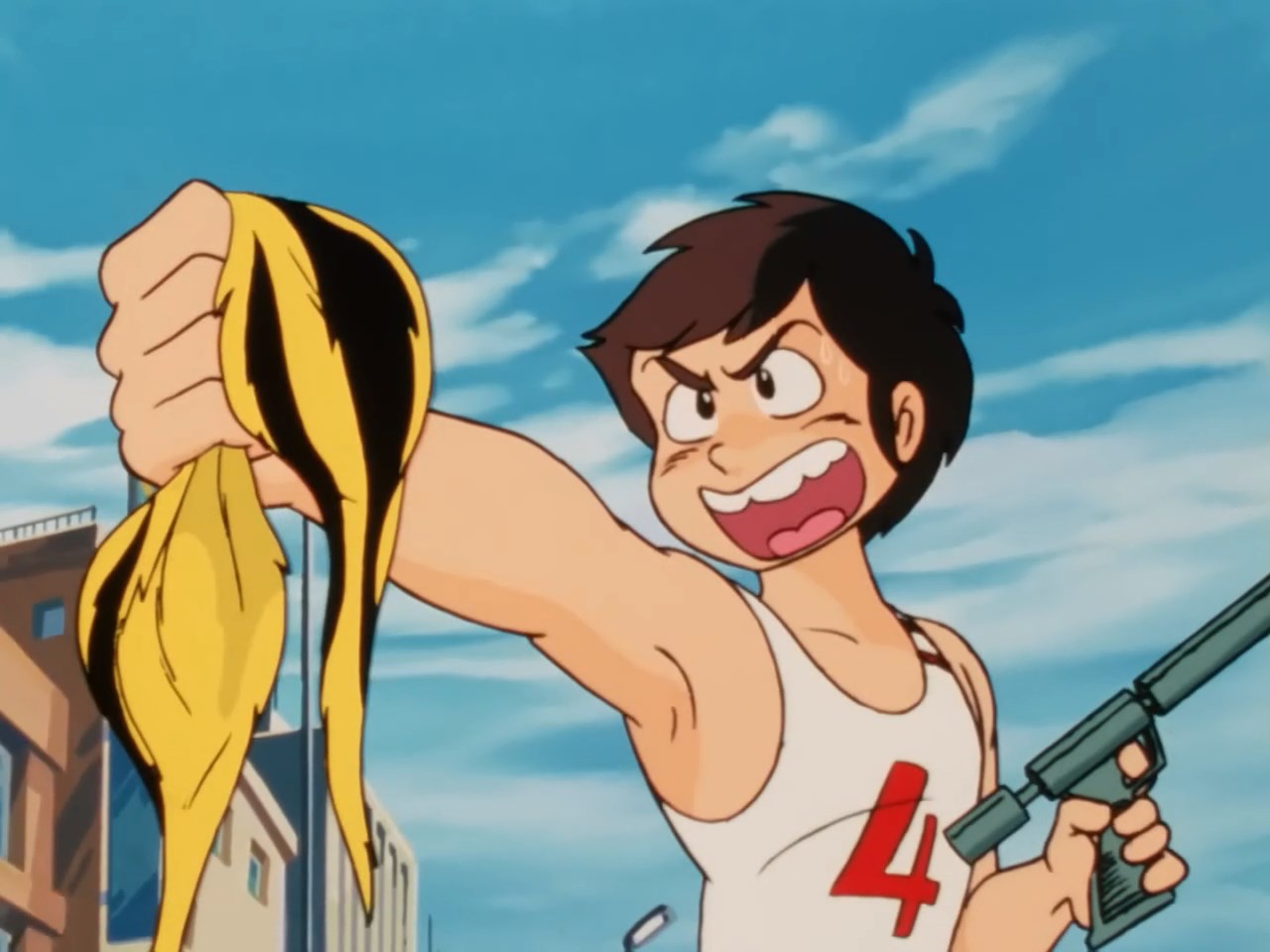
It’s more than the non-sequitur ‘surrealism’**** of Reeves ‘n’ Mortimer, or the later Boosh atrocities, or the fucking hellish lolrandom Flash humour of Charlie the Unicorn and that squirrel dickhead. You can pick out sentences and hear them being spoken aloud by that Ataru Moroboshi avatar Nash used for years.
No-one ever acknowledges this influence, and I’m not sure why.
Hey, here’s a slightly bleak personal story that I promise is nearly relevant. I really, really like Cardiacs. Yeah, that band middle-aged men like, yeah. ‘Pronk,’ hahahahahahahahahaha. I stopped listening to them when T Smith had his unfortunate incident—I was heartbroken that such genius, widely ignored, had been snapped into pieces and stuffed into a broken body that couldn’t even compose properly any more. So I put all the Cardiacs’ stuff into a big emotion-bin in my mind, because it’s important and meaningful and beautiful, ready for me to pull out when I was at my lowest. Well, that came recently, and I’ve been listening to Whole World Window***** and everything else and it’s pulled me out of something very dark indeed.
Other people do this, right? There are games that I haven’t finished because they made me go ‘oooh, I need to save this for when I feel like killing myself.’****** Is that just me? It might just be me.
Anyway, J Nash’s work was to the written word what T Smith was to music. Completely impenetrable at first and maybe forever, but rewarding and massive and innocent if it clicks. It doesn’t click for everyone. But if it does, and you meet someone else for whom it clicked, you’re probably going to get along. Concepts and ideas are thrown into the turmoil almost at will, and the results were often so far ahead of what everyone else was doing that now, looking back, it seems absurd. Cadfael & God, man.
I still don’t really have the ability to describe how influential J Nash was to me on every level. We only spoke a few times, via email, but he was always unfailingly polite, thrilled/surprised/baffled to hear how influential he was (I only got a job writing for Games Workshop because the sentence structure of my cover letter, which was stolen entirely from J Nash’s general style, made the manager laugh******* so I got pulled in for an interview which I literally blagged, but that’s a story I shouldn’t tell publicly for technical reasons. J Nash thought this a hoot), and genuinely, effortlessly funny. He once sent me a little hand-drawn cartoon of a Victorian audience on my birthday, and when I figure out which email inbox it’s buried in I shall treasure it always, again. He was happy to answer probing, idiot questions from a young writer like me, offer advice on grammar (‘everyone else is wrong, of course.’), and confirm silly things about stuff he’d said offhand in forum posts I alone remembered, or even noticed.
I think, more than anything, his work taught me to simply not care what anyone else thought (while at the same time caring deeply that it landed, and that it said true things). Words, sentences, paragraphs and stories are not immutable objects once shouted onto a page, and the trick is to keep prodding at them until you yourself, the writer, are happy. This includes when editing the work of others. J Nash taught me to write properly; I don’t simply mean with all good grammar and that, but with intent, and character, and meaning. It doesn’t matter if you spiral tangentially, as long as there’s a payoff and you’re not wasting the reader’s time. Writing for an audience is a privilege and an honour, and I thank J Nash for showing me why that’s true. My own work is often impenetrable and self-indlugent********, sometimes fatally so, and I don’t care*********. People who get it will get it, and I don’t write for the ones who don’t. Brilliantly, I am confident that Nash would have hated what I’m writing here, as it’s got all swears in and just sort of wanders about.
His Super Play work completely changed my life, too—it was his reviews of AnimEigo’s Urusei Yatsura tapes that got me into Rumiko Takashi and wider anime in general. This sounds trite now, but back in the mid-90s when tapes were expensive and I only had a paper round, I knew his recommendations were going to appeal to me. It’s ra-a-a-i-ny today. He really was a bit of an Ataru; cheerfully stumbling through a life and world that, really, he didn’t belong to.
I’ll stop here, because I’m feeling genuinely quite emotional about all this. There’s a Camus quote that S Walker nicked for his S Four record:
“A man’s work is nothing but this slow trek to rediscover, through the detours of art, those two or three great and simple images in whose presence his heart first opened.”
I don’t think Camus was thinking of Cadfael & God, when he wrote that. But I think of it when I read (it).
J Nash, you were really good. Thank you.
p.s. if anyone reading this has archives of J Nash’s work, PLEASE get in touch. I’ve got most of Or Something, but am missing images and the weird mp3 things he did. I have scans of all Amiga Powers, but I only have the version of AP2 from ages ago before the transfer from Pipex; I have nothing from The Weekly or the ill-fated Podgamer disaster. House Of Nash? Not a chance. The man was very, very stubborn about his robots.txt. And gosh, if you have any Unseen Nash, I’d love you forever if you passed it along.
*I don’t follow the Gillen online. Apparently J Walker wrote about Nash in Kotaku, but he might as well have written it on the back of a big envelope and hidden it on the Moon; I hate Kotaku. But the Gillen referencing Cadfael & God, one of the single funniest things ever written in a games mag, softened the blow a little.
**short for ‘Jsuper Nashwan’, named for the powerful Speedball 2 team, I’m told by those who know
*** I imagine also that a far greater many people hated every idiot word the man wrote, which is much funnier
****not surrealism
***** jesus h christ, lads, you need to get on the Spratley’s Japs remaster, it’s perfect.
******Expedition 33 for example
******* he didn’t laugh for long, we didn’t get along, sadly.
******** ‘I can spell it any way I please.’
*********None of you remember Hashtag Jones, which is probably for the best
